A blacksmith, coppersmith, and woodworker now based in Copenhagen, Denmark, Spijk Selby traces his passion for traditional craftsmanship back to his family's kitchen in Munich, where he started cooking with his parents at age three. His mother had built him a play kitchen, but it was one taste of the real thing, the smell of onions, carrots, and celery browning on the stove, that hooked him for good and sparked a lifelong love of food and working with his hands.
At nine, Spijk forged his first nail with a local blacksmith at a craft fair near his home in Ghent, New York, and knew immediately what he wanted to do. He began formal training at twelve at Prospect Hill Forge in Waltham, Massachusetts, and later studied with Hudson Valley artist-ironworker Noah Khoury to sharpen what he'd learned. At thirteen, he started apprenticing at Hancock Shaker Village, learning the fundamentals from master blacksmiths through traditional Shaker designs before developing a style of his own, first as an apprentice and later as a docent.
Spijk founded Rocky Hill Forge in New York's Hudson Valley at seventeen, built on the belief that a kitchen tool should be functional, sustainable, and beautiful all at once, a direct answer to his own frustration with the off-the-rack tools he'd grown up cooking with. Abe, Eatingtools' founder, first met Spijk in those same early Upstate New York days, and has been fortunate to follow his journey ever since, long before the two ever made anything official. In 2020, Spijk took his work on the road with a mobile whetstone sharpening service, visiting farmers' markets and co-ops across Upstate New York and Western Massachusetts and sharpening roughly 2,500 knives a year, income that gave him room to experiment with hand-raised, tin-lined copper pans and stainless steel bowls alongside his knives.
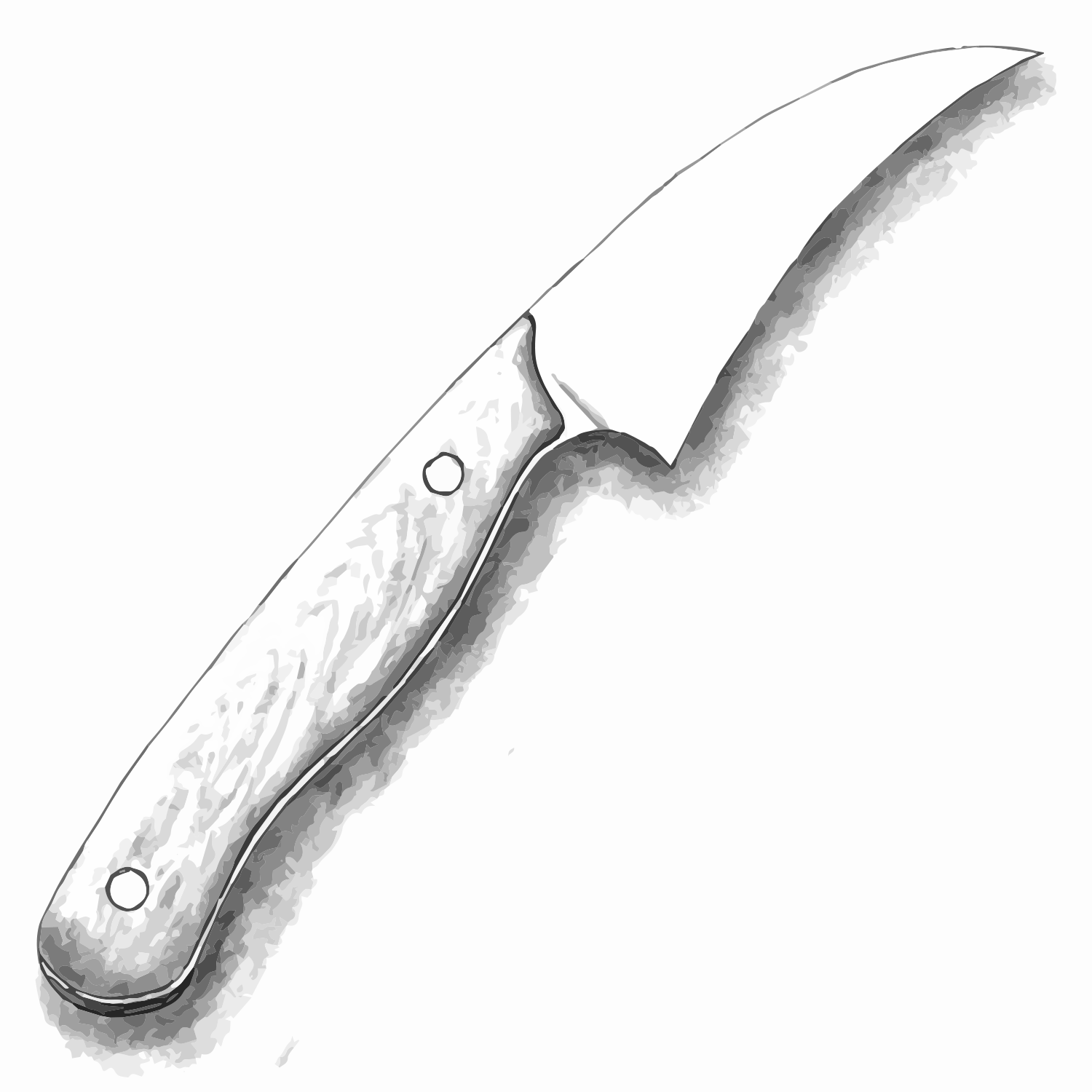
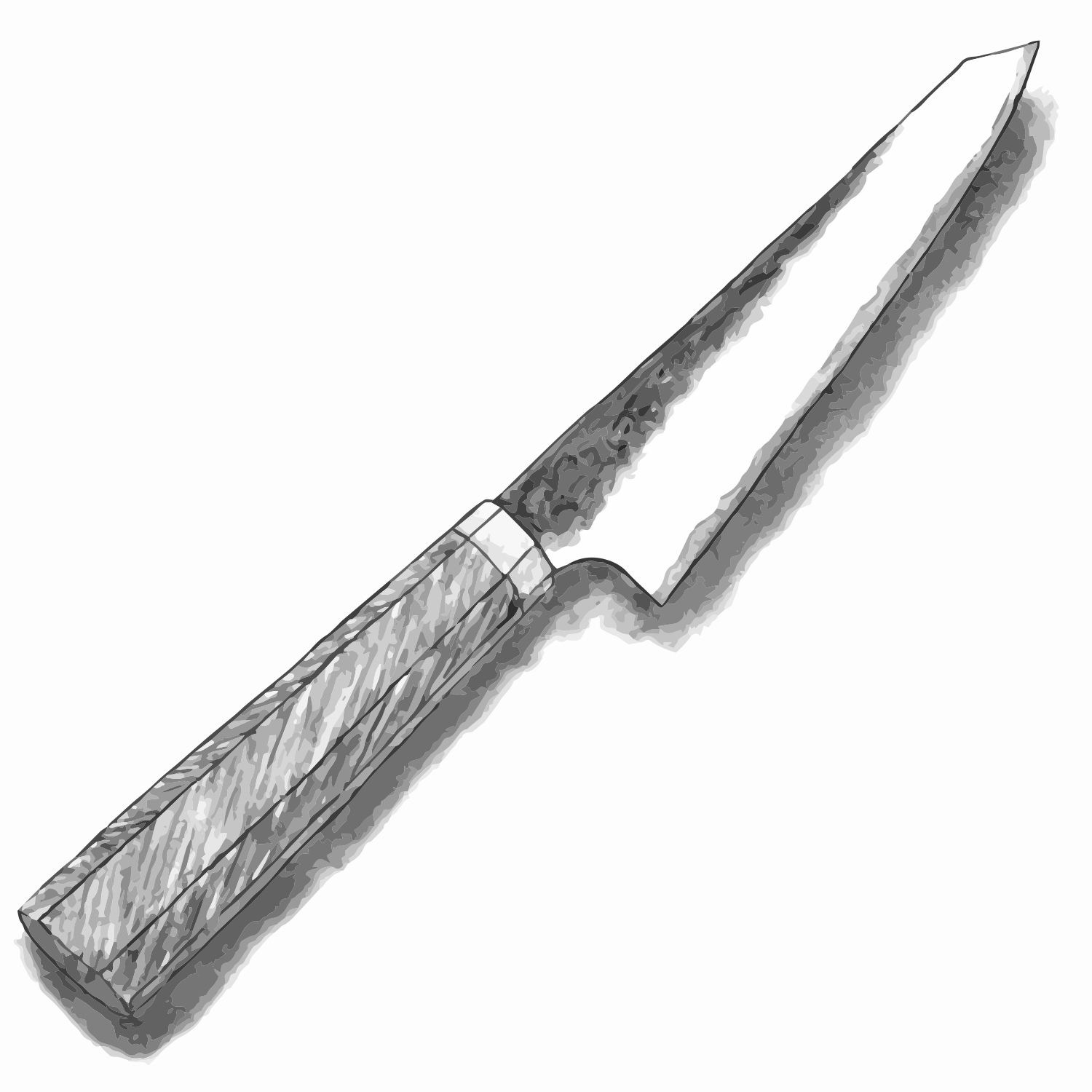
In 2024, Spijk partnered with Zoe McCormick to build a full blacksmith shop inside a shipping container, a nomadic workshop that became the means of moving Rocky Hill Forge from the Hudson Valley to Copenhagen. It shipped from New York, arrived that winter, and by early 2025 had become the city's only traditional blacksmith shop, with the forge lit for the first time as Rocky Hill Forge Denmark. Since then, Spijk has resumed production, brought back his blacksmithing classes and onsite knife sharpening, and grown his line to include hand-raised copper cookware and steel servingware alongside his continued forging of high-carbon steel chef's knives. If anything, he's grown more exacting with time, the kind of maker who studies the historical context of an object and details many would overlook: the way copper tapers from base through sidewalls during spinning, the way a handle's attachment style affects heat transfer, how to ensure historically significant craft techniques can live on. It's that scholar's patience for the parts only the most discerning cooks would ever notice that runs through everything he makes, still built on the same principles he started with: functionality, sustainability, and beauty.