Dylan Ambrosini was born in Rome and raised in Milwaukee, Wisconsin, an upbringing split squarely down a historical line. His father, a motocross racer in his younger years, once rigged his own motorcycle helmet with the cut-down base of a red broom so he could ride looking like a Roman legionnaire, and raised Dylan on a steady diet of emperors, gladiators, and lectures on Garibaldi. It was his mother who eventually pushed him toward books without a golden eagle on the cover. Trips back to Italy punctuated his childhood and, by his own account, did more to shape who he became than anything in Wisconsin. A life-long fascination with history was ingrained.
He left Milwaukee at eighteen already singularly focused on cooking, having spent most of high school working restaurant jobs he increasingly prioritized over academics. That focus carried him to Chicago, where he worked his way up through kitchens and eventually landed at a one-star restaurant. The obsession held until February 2020, when he left that job just as dine-in service across the country shut down.
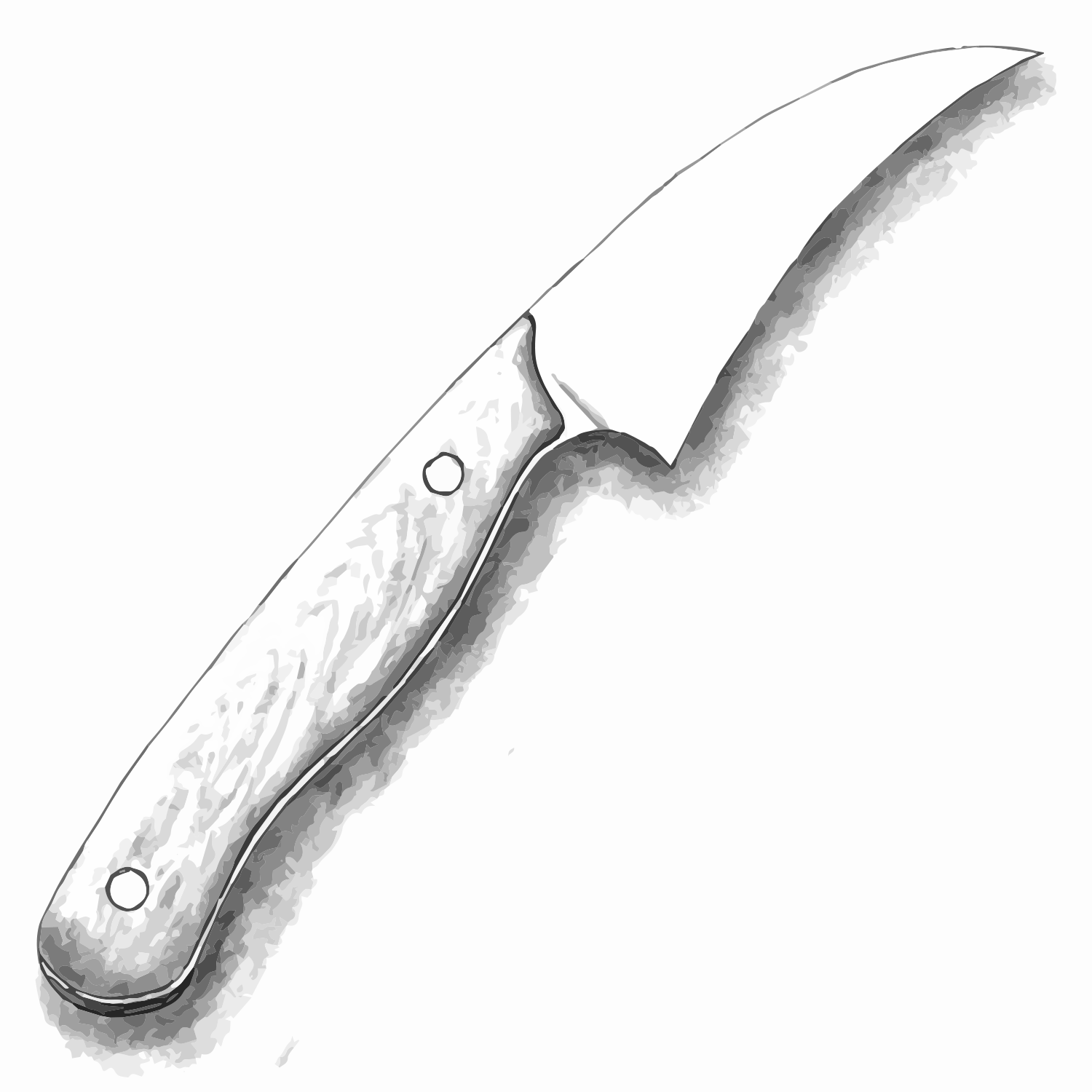
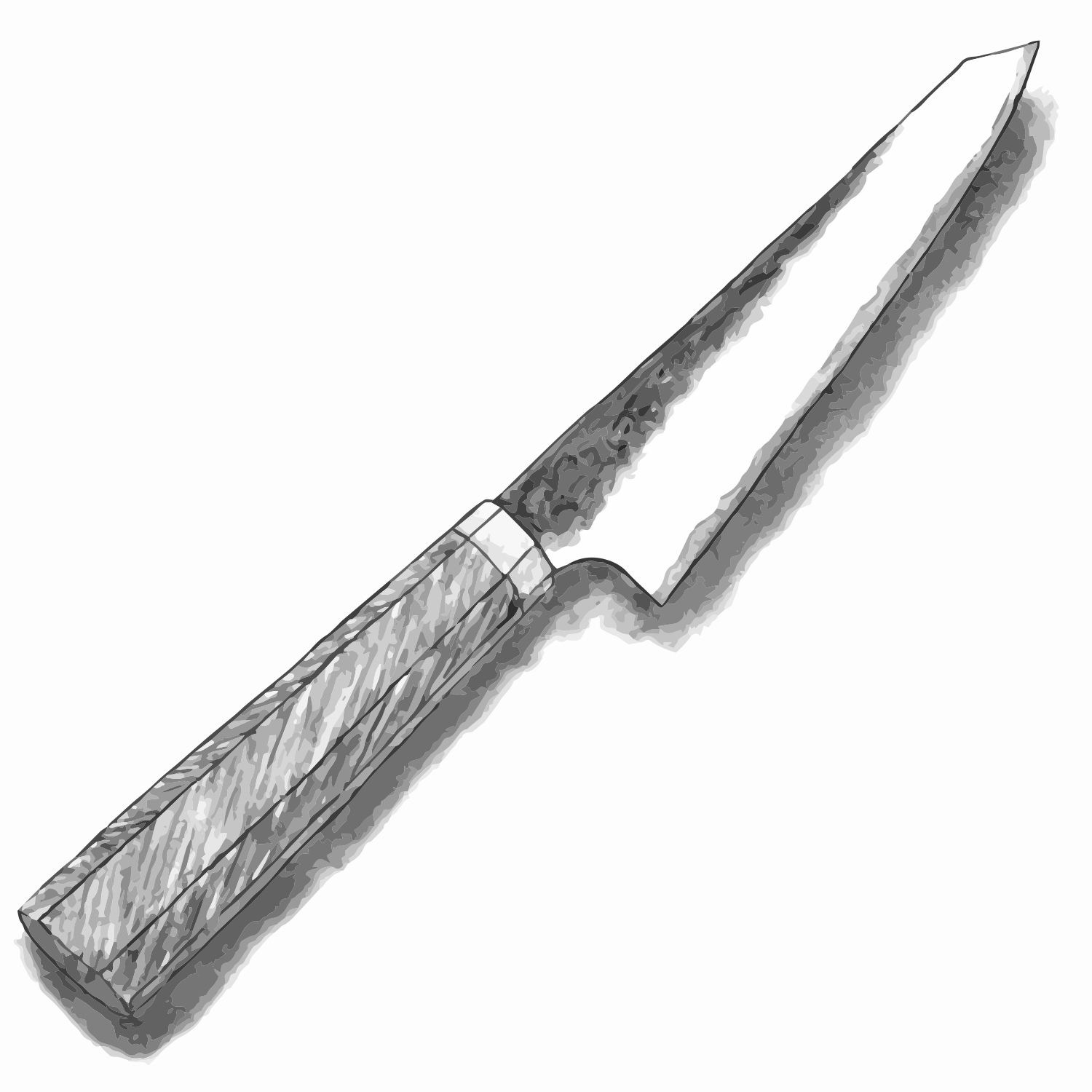
With nowhere to cook, Dylan found a communal metal shop near his apartment and began making chef knives, crude ones at first, by his own admission. The years that followed were a slow, grueling climb out of the restaurant industry and into a new one. Today he works as a full time knifemaker, teaches sharpening classes, and has gone back to school for a history degree, the same subject that filled so much of his childhood.
His knives are shaped, functionally, by years spent over a cutting board and a range, and aesthetically by his love of history, old ruins and architecture especially, dinosaurs too. Dylan describes a specific feeling: the sense of being entranced by an object behind museum glass, separated from it by centuries and a few inches. Steel, he’s found, is one of the best materials for carrying that feeling, holding on its surface nearly everything that has happened to it, from the marks of its forging through years of use and age. His goal now is to put that same feeling directly into someone’s hand, not kept behind glass, but in a tool that is carried forward and aged with memories. That conviction shows in the work itself, knives engraved stroke by stroke with hammer and graver, each one left to carry evidence of its own making the way an old object does.