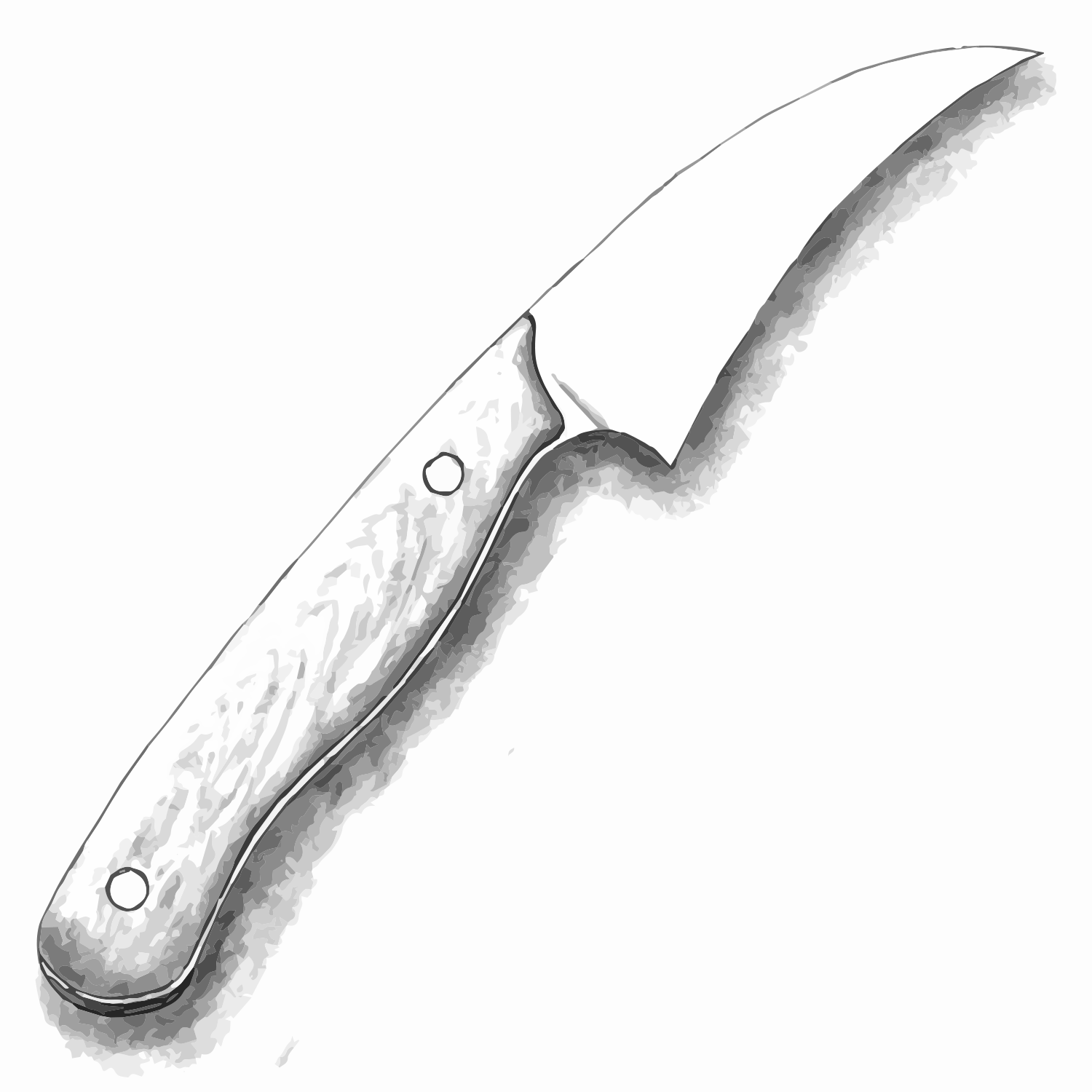
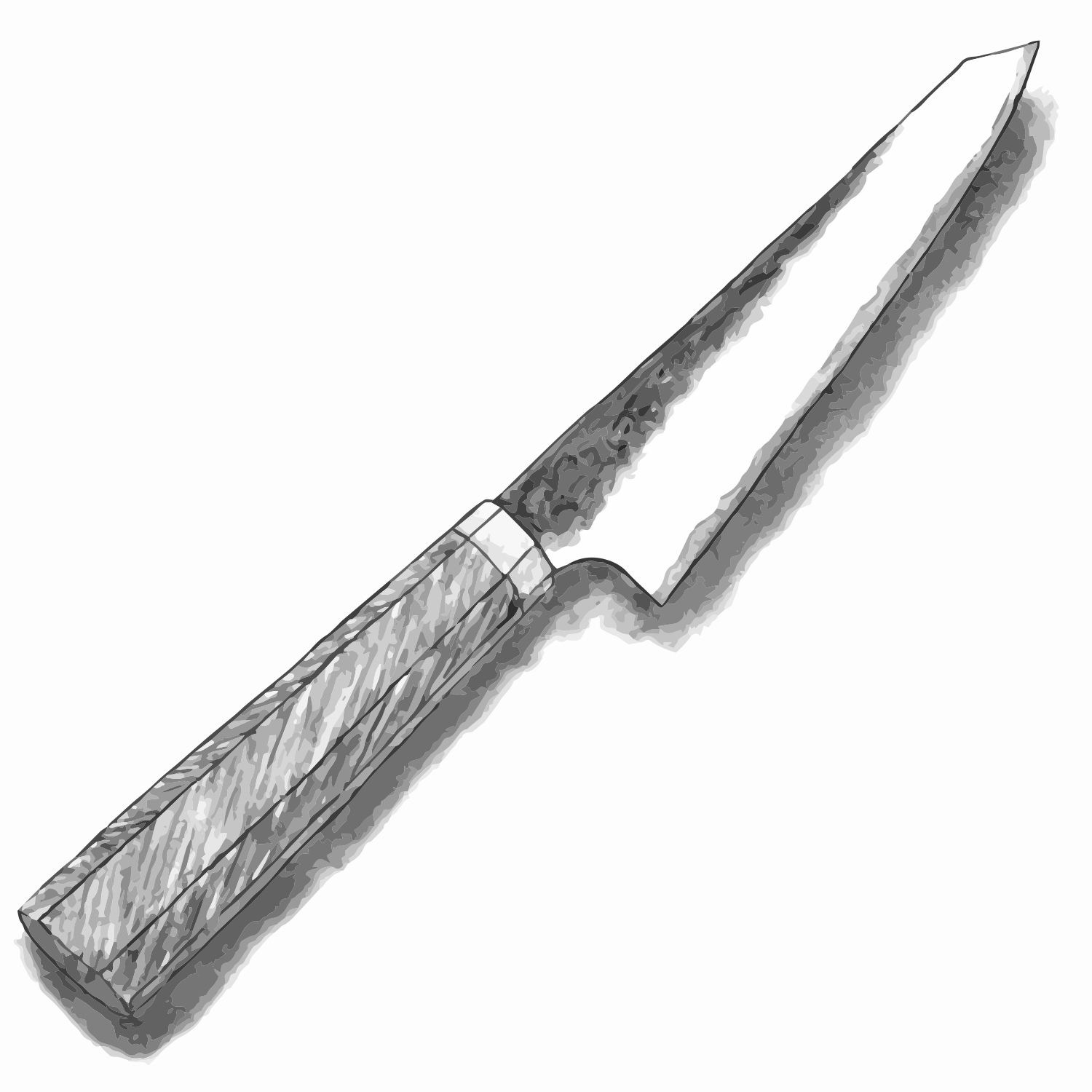
Born and raised in Mataró, just north of Barcelona, Isal Triadó has been making things by hand for as long as he can remember. As a child he built objects instinctively, experimenting with materials and driven by a natural curiosity about how things worked. That early inclination toward craft eventually led him not to metal, but to the kitchen.
Isal studied gastronomy at the Basque Culinary Center in Spain’s Basque Country and went on to work in several professional kitchens, even attempting to open his own restaurant. There, immersed in the realities of service, he developed a deep respect for precision, efficiency, and the tools that make both possible. It was during his final restaurant position that his family gifted him a quality knife. The difference was immediate. It did not change his life, but it made his work sharper, more exact, more enjoyable. That subtle improvement marked the beginning of a deeper curiosity.
Driven by a desire to understand the tool in his hand, Isal began teaching himself to make kitchen knives. What started as personal exploration evolved into a disciplined craft practice. Bladesmithing allowed him to merge two worlds: the rigor of professional cooking and the satisfaction of shaping steel and wood with intention.
His work reflects this dual foundation. Strongly influenced by Japanese knifemaking, Isal pursues clarity in form and honesty in materials. Carbon steels and natural woods, often in sober, understated tones, define his aesthetic. There is no ornament for its own sake, no excess. Performance comes first. The lines are direct, the geometry purposeful, the details restrained.
At the same time, Isal continues to evolve. Recently, he has begun exploring new techniques to push his craftsmanship further, seeking a voice that feels increasingly his own rather than purely derivative of tradition. The goal is not flash or novelty, but refinement — knives that feel personal, grounded, and resolved.
Isal hopes his knives are used with the same care and intention with which they are made. Not precious objects set aside, but tools that earn their place through daily work. Special not because they demand attention, but because over time they become inseparable from the hands that hold them.